Since 1978, the Basque Film Archive has been dedicated to preserving and promoting Basque film and audiovisual heritage. In recent years, the institution has taken a major step forward by beginning to restore films and reintroduce them to audiences both in the Basque Country and internationally. Some are great classics, while others are less well known but possess immense historical value.
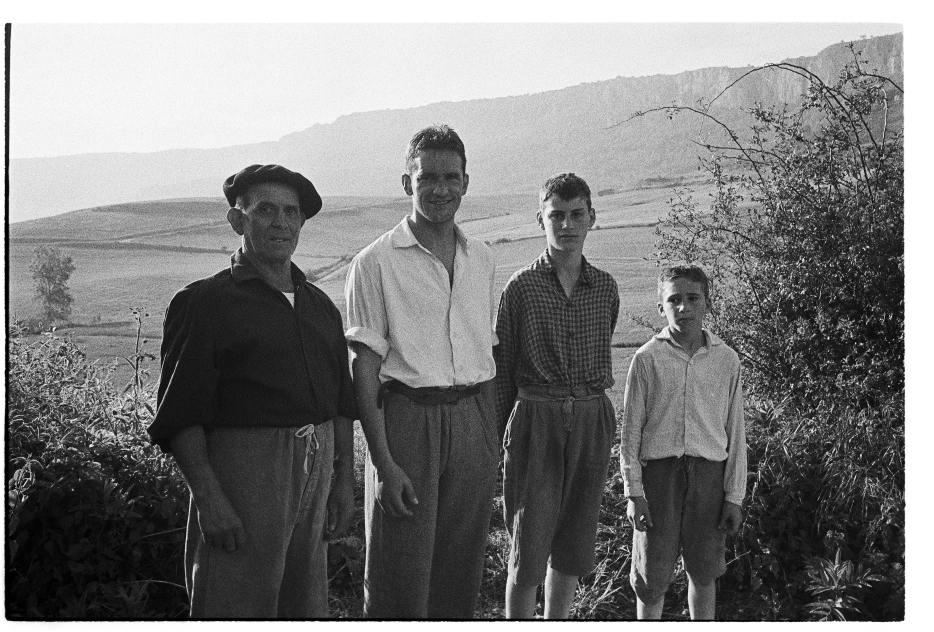
In 1984, Montxo Armendáriz made his first feature film, Tasio. The film was produced by Elías Querejeta and received a grant from the Basque Government. It premiered at the San Sebastián Film Festival. Shot entirely in Navarre and recorded with live sound, the film transcends geographical boundaries to portray a rural world that has since disappeared.
The restoration project for Tasio began in 2023. The following year, marking the 40th anniversary of its release, the film was presented at some of the leading festivals dedicated to classic cinema: Cannes Classics, Il Cinema Ritrovato in Bologna, the San Sebastián Film Festival and the Lumière Festival in Lyon.
Restoration notes
The 4K restoration was funded by the Basque Government, overseen by the Basque Film Archive with the agreement of Mercury Films, and carried out at the L’Immagine Ritrovata laboratory using the original negatives held by Filmoteca Española. Montxo Armendáriz personally supervised the restoration.
In 1981, the Navarrese director decided to film Navarre’s last charcoal burners, documenting an occupation on the verge of disappearing. His encounters with these charcoal burners, particularly Anastasio Ochoa, would later inspire his first feature film, Tasio. As part of the restoration and screening of Tasio, it was decided in 2024 to restore this 1981 documentary as well. This was the Basque Film Archive’s first independently restoration project, carried out entirely at the institution’s premises.
Restoration notes
The 4K restoration was conceived and carried out by the Basque Film Archive with the agreement of the Dirección General de Cultura - Príncipe de Viana. It was restored from a 35 mm positive print held in the Basque Film Archive’s collection, under the supervision of Montxo Armendáriz.
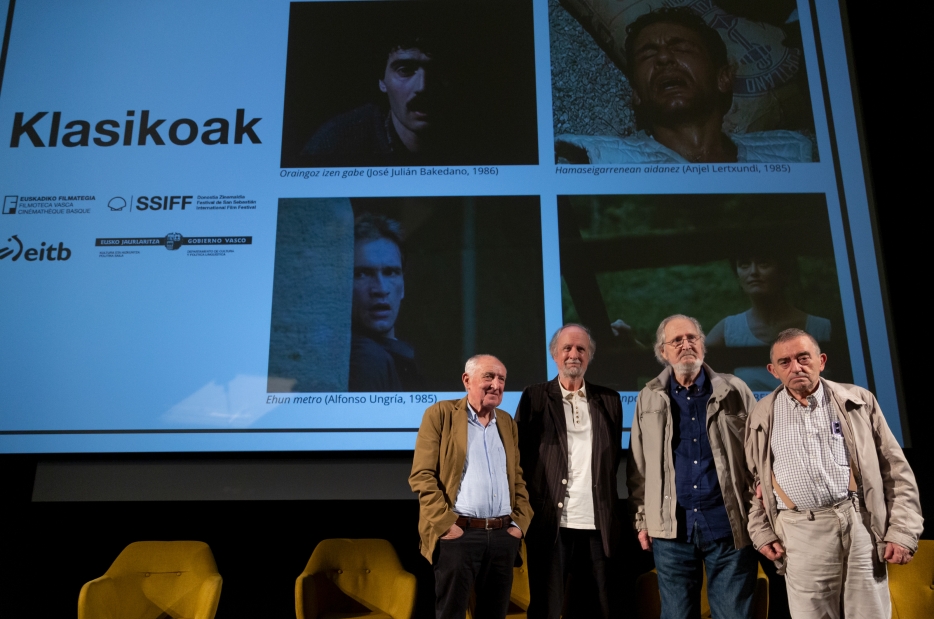
In 1985, the Basque Government, in collaboration with EITB (the basque public broadcast), promoted the production of films in the Basque language and funded three medium-length films based on three landmark novels of Basque literature. The initiative was not repeated, but it inspired the production of another medium-length film in Basque in 1986. These projects were pioneering efforts in the development of Basque-language cinema, which is now recognised internationally. To mark the 40th anniversary of these films in 2025, the Basque Film Archive and EITB joined forces to restore all four works.
Hamaseigarrenean aidanez (Anjel Lertxundi, 1985)
In 1983, Anjel Lertxundi published the novel Hamaseigarrenean aidanez, seeking to portray the world of betting, a reality deeply rooted in Basque society. Two years later, he adapted the novel for the screen in his first experience as a film director.
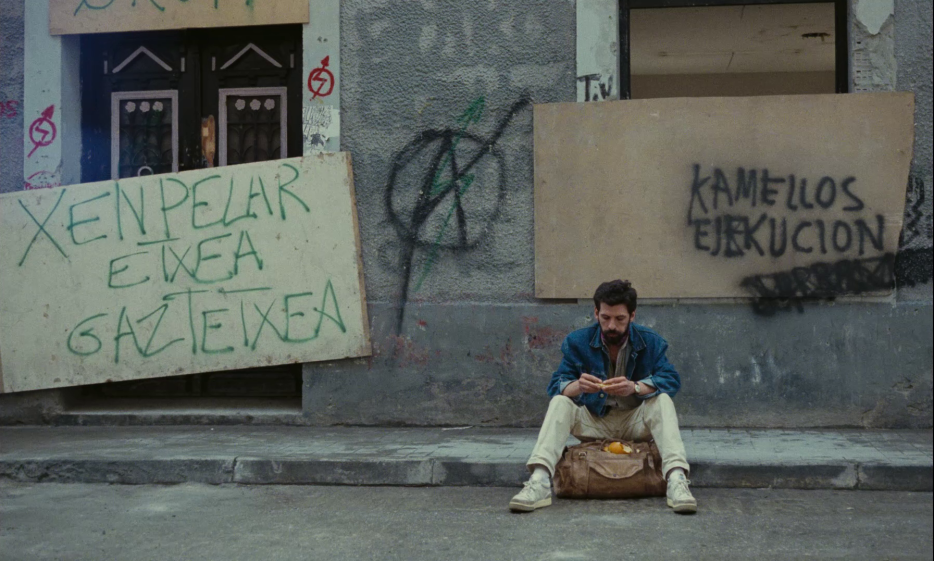
Ehun metro (Alfonso Ungría, 1985)
The film is a screen adaptation of Ramon Saizarbitoria’s novel of the same name, written during the Franco dictatorship and published only in 1976, following Franco’s death.
Zergatik panpox (Xabier Elorriaga, 1985)
A screen adaptation of the novel of the same name by Basque writer Arantxa Urretabizkaia, the film offers an honest portrayal of the life of a woman in the 1970s.
Oraingoz izen gabe (José Julián Bakedano, 1986)
Based on a short story by Jorge Luis Borges, José Julián Bakedano commissioned writer Bernardo Atxaga to write the screenplay for the medium-length film Oraingoz izen gabe, his only venture into fiction filmmaking. Shot entirely with live sound, the film uses the variety of Basque spoken in rural Bizkaia, which differs considerably from the Basque used in more formal contexts.
Restoration notes
The 4K restorations were funded by EITB and the Basque Film Archive, overseen by the Archive under the auspices of the Basque Government, and carried out at the L’Immagine Ritrovata laboratories in Bologna using the original negatives held by the Basque Film Archive and the Filmoteca Española. The restorations were supervised by Lertxundi, Ungría, Elorriaga and Bakedano.
This was Navarrese director Ana Díez’s first fiction feature, following her work as an assistant director on various Basque film projects in the 1980s. Ander eta Yul was the first film directed by a woman in the Basque Country, at a time when the industry was almost entirely dominated by men. The film’s restoration project began in 2026, further strengthening the relationship between the Basque Film Archive and EITB in the field of Basque heritage preservation.
Restoration notes
The 4K restoration was funded by EITB and the Basque Film Archive, overseen by the Archive under the auspices of the Basque Government, and carried out at the L’Immagine Ritrovata laboratory in Bologna using the original negatives held by Filmoteca Española. The restoration was supervised by Ana Díez and cinematographer Gonzalo Fernández Berridi.
With a running time of 3 hours and 45 minutes, Gipuzkoa was filmed between 1976 and 1979 and constitutes an ethnographic record of the social and cultural realities of the time. It is divided into eight parts: Man, Stone, Meadows, Tree, The Rural Environment, Iron, The Sea and Towns. The screenplay was written by Pío Caro Baroja himself, with the collaboration of his brother, anthropologist and historian Julio Caro Baroja.
The film commissioned by the Caja de Ahorros Provincial de Gipuzkoa has been digitized by the technical department of the Basque Film Archive from a copy held in the institution’s archives.